
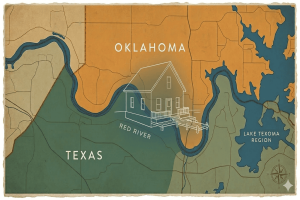
Lake Texoma Tax Guide: The Red River Divide
Choosing where to buy a home or investment property in the Lake Texoma area—which is part of the booming Dallas-Fort Worth (DFW) Metroplex and Southern Oklahoma regions—often involves more than just a preference for the “Texas side” versus the “Oklahoma side.” When you’re dealing with a state line that runs directly through a major lake, the property tax laws of Texas and Oklahoma in 2026 create a dramatic, thousands-of-dollars-a-year difference for homebuyers.
If you are thinking about purchasing a primary residence, a retirement property, or an investment lake house, understanding the Texas 2026 property tax laws and Oklahoma property tax 2026 updates is essential. Let’s explore the differences in what you pay (the “tax rate”) and how your property’s value is calculated (the “appraisal”) to help you make an educated decision.
The Secret Advantage: Cross-Border Real Estate Investing
One of the most overlooked opportunities in Lake Texoma real estate is leveraging the tax divide. Living on or near a state line means you get to choose which tax system benefits you most. For many smart investors, this means setting up their primary residence (or “homestead”) where the homeowner benefits are greatest, while potentially keeping their “second home” or investment properties where the holding costs and overall tax burden are lowest.
This strategic approach to Lake Texoma property tax rates isn’t just for professionals; it’s a strategy every homebuyer should explore, especially when the divide between Grayson County, Texas, and Marshall and Bryan Counties, Oklahoma, is this distinct.
Primary Residence Comparison: Texas vs. Oklahoma (2026)
The Texas Strategy: Big Exemptions (Senate Bill 4 & 23)
If you are making the Lake Texoma area your primary home, Texas offers a robust set of protections. Texas’s system relies heavily on homestead exemptions, which are defined as the specific dollar amount of your home’s value that the government is restricted from taxing.
- Standard Texas Homestead Exemption 2026: Under Texas Senate Bill 4, the mandatory school district exemption has increased significantly. For 2026, the first $140,000 of your home’s value is completely shielded from school district property taxes. If your home is valued at $400,000, you are only taxed as if it were worth $260,000 for the school portion of your bill.
- A Massive Bonus for Seniors (Over 65): Texas provides an incredibly powerful “Autumn of Life” protection through Senate Bill 23. If you are 65 or older (or disabled), the state adds another $60,000 to your existing exemption, bringing your total school tax shield to $200,000.
- The “Tax Freeze” for Seniors: Beyond the exemption, the powerful Texas over 65 tax ceiling goes into effect. Once you turn 65 and claim your homestead, the actual dollar amount you pay to the school district is “frozen” and cannot increase, regardless of how much your home value goes up. This provides invaluable peace of mind for retirees on a fixed income.
The Oklahoma Strategy: Value Caps and Stable Appraisals
Oklahoma’s method of relief focuses on stability. They don’t offer massive exemptions, but their system ensures you won’t have a sudden, massive property tax bill that you can’t pay.
- The 3% Appraisal Cap: In Oklahoma, the annual growth in the “taxable value” of a homestead property is constitutionally limited to just 3% per year. Even if the market value of your home skyrockets by 20%, your tax bill can only increase based on a 3% valuation jump.
- Physical Appraisal Cycle: You correctly identified that Oklahoma assessors operate on a four-year cycle. Properties must be physically inspected at least once every four years, providing another layer of stability compared to the annual market-based adjustments that occur in many Texas counties.
Second Homes and Investment Property: When the “Safety Nets” Disappear
If you are buying a lake house, a vacation getaway, or an investment property that will not be your primary “homestead,” the landscape changes entirely. This is where homebuyers often face the biggest surprises, as the special exemptions and caps that protected primary homeowners are often reduced or eliminated.
Texas Second Homes: The Challenge
- No $140,000 Exemptions: When you are not using a property as your primary homestead, you lose all access to the $140,000 (general) or $200,000 (senior) homestead exemptions. You pay taxes on the property’s full appraised value.
- Annual Reappraisals: Texas generally appraises properties every year. Without the 10% homestead appraisal cap, non-homestead properties are much more vulnerable to large, sudden spikes in value, although a temporary 20% cap (Texas Proposition 4) for non-homestead properties under $5 million currently offers some protection but is set to expire.
Oklahoma Second Homes: The Advantage
- Stability of the 5% Cap: This is a major advantage for Oklahoma in the second home market. While Oklahoma homesteads are capped at 3% growth, all other real property (including second homes and commercial properties) are constitutionally limited to an annual growth cap of 5%.
- Lower Initial Rates: Without the hefty state income tax that Texas lacks (it does have a capital gains and corporate tax), property tax rates (or “millage”) in Oklahoma are generally lower across the board. This stability makes holding a lake house in Oklahoma significantly more predictable and often much less expensive than a similarly valued property on the Texas side.
Homeowners Over 65: Which State Wins?
For those planning their retirement near Lake Texoma, both states offer specific advantages, but the rules are different:
- Texas Over-65 Summary: The Texas tax freeze 2026 is automatic upon filing the exemption. It freezes the school district dollar amount. This is a incredibly powerful tool for shielding retirees with high-value primary homes from rising taxes.
- Oklahoma Over-65 Summary: Oklahoma offers a Senior Valuation Freeze, which freezes the value of the property. However, this is only available if your total household income is below a certain threshold (which, for example, is approximately $99,000 for many counties in 2026). If you are above this income level, your value can still increase by the annual 3% cap.
Educated Decisions for DFW and Southern OK Buyers
The best choice between Texas and Oklahoma for Lake Texoma property taxes depends entirely on your specific situation.
- A Primary Residence: If you are over 65, have a healthy retirement income, and are looking for a significant primary residence, the $200,000 Texas exemption and the tax freeze make the “Texas side” incredibly attractive.
- A Lake Getaway or Investment: If you are purchasing a second home for weekend use or as an investment property, the 5% valuation cap and generally lower tax rates in Oklahoma can save you thousands of dollars annually, offering the most cost-effective way to enjoy Red River real estate and Lake Texoma property.
Quick 2026 Tax Comparison Table
| Feature | Texas (2026) | Oklahoma (2026) |
| Primary Home Exemption (School) | $140,000 | $1,000 (Credit) |
| Senior Exemption (65+, School) | $200,000 (Total) | Income-Based Freeze |
| Second Home Valuation Cap | 20% (Temporary) | 5% (Constitutionally Cap) |
| Appraisal Cycle | Annual | Physical 4-Years |
| State Income Tax | None | Low/Modest (varies) |
References & Trustworthy Sources
- Texas Senate Bill 4, Senate Bill 23, and House Bill 9 (89th Legislative Session)
- Oklahoma Constitution, Article X (Ad Valorem Tax)
- Grayson Central Appraisal District (TX) Rate and Exemption Guidelines
- Marshall County Assessor (OK) Ad Valorem Property Tax Information